What we don't talk about, though, is deconstructing a commercial on television, or a product ad in a magazine. There are a lot of smoke and mirrors surrounding these things. The use of celebrities to sell water or pizza or makeup is all too common. Playing with emotions to convince you to give money to a charity is common as well. Most of the time, we don't pay attention to these persuasion tricks, which are designed to convince us to do something.
I fall in line with the media literacy movement. The ability to deconstruct media is something that should be taught. Media is all around us. It's better to teach the younger generations about the tricks used out there instead of denying their existence. In both of my subjects, English and Social Studies, I have discussed this. In English, I teach about persuasion techniques. I make the kids aware of the ways that media can trick them. In Social Studies, I discuss politics. We evaluate debates and campaign ads. It's important that everyone knows the techniques used to convince them to vote for a candidate or think a certain way. Fact checking is incredibly important, and goes into the whole concept of deconstructing media.
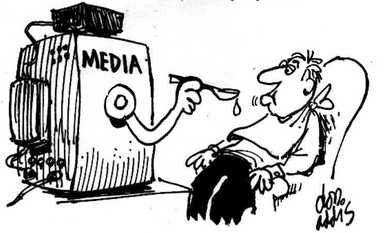
I really like this image, and I think it goes with what we're saying about media and the need to evaluate it's meaning. When watching advertisements or political debates, we as a public, are being "spoon fed" what those who create this media want us to know and see.

I agree with your comic about being spoon fed by those who create the media. I have lived in several town/cities in WV. I have always found it interesting what the newspapers print and don’t print. For those who read the paper as if it were the truth only, the creators of that media are the benefactors.
ReplyDelete